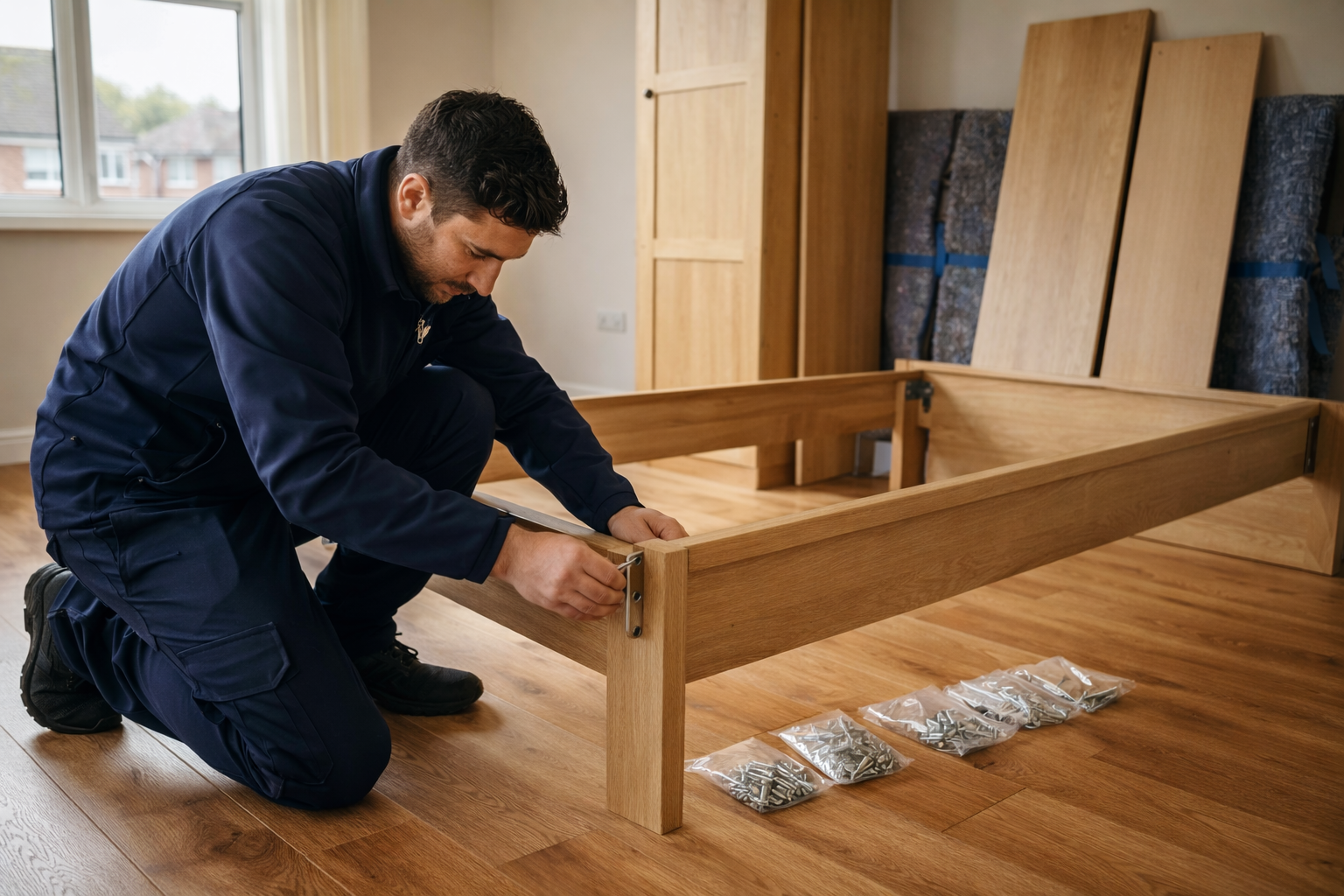
One of the most overlooked parts of moving house is dealing with large furniture. Wardrobes, bed frames, dining tables, and flat-pack furniture often won't fit through doorways or into removal vans unless they're taken apart first. Here's everything you need to know about furniture assembly and disassembly during a move.
Why Disassembly Matters
Trying to move fully assembled furniture causes three common problems:
- It won't fit. Standard UK doorways are 762mm wide. Many wardrobes, desks, and bed frames are wider than that.
- It gets damaged. Forcing large items through tight spaces scratches walls, chips door frames, and breaks furniture legs.
- It's dangerous. Heavy, awkward items carried at angles create injury risks for movers.
Taking furniture apart before the move solves all three problems and makes loading the van much more efficient.
Furniture That Usually Needs Disassembling
Always Disassemble
- Bed frames — especially king and super king sizes
- Large wardrobes — freestanding units over 1.8m tall
- Dining tables with removable legs
- Flat-pack furniture (IKEA, Argos, etc.) — designed to be taken apart
- Desks with detachable tops or drawers
- Bunk beds and cabin beds
Usually Fine Assembled
- Sofas — most fit through standard doors (measure first)
- Chest of drawers — remove drawers to reduce weight, but the carcass usually fits
- Bookcases — remove shelves, carry the frame
- Coffee tables and side tables
- Small bedside tables
Check First
- Corner sofas — some separate into sections, others don't
- L-shaped desks — depends on construction
- Display cabinets — remove glass shelves and doors, then assess the frame
Tools You'll Need
Keep these tools handy on moving day:
- Allen keys (hex keys) — various sizes, essential for flat-pack furniture
- Phillips head screwdriver — #2 size covers most furniture screws
- Flat head screwdriver — for slotted screws and prying
- Adjustable spanner — for bolts and nuts
- Power drill/driver — saves time on furniture with many screws
- Pliers — for stubborn bolts and cam locks
- Rubber mallet — for tapping joints apart without damage
Step-by-Step Disassembly Process
1. Photograph Everything
Before removing a single screw, take photos from multiple angles. Close-up shots of joints, connections, and brackets will save you time during reassembly. This is especially important for flat-pack furniture where the assembly instructions have long since been recycled.
2. Label Every Part
Use masking tape and a marker to label each component:
- Which piece of furniture it belongs to
- Which part it is (e.g., "wardrobe — left side panel")
- Orientation (top, bottom, front, back)
3. Bag and Tag Hardware
This is the step people skip — and then regret.
- Put all screws, bolts, cam locks, and dowels into small ziplock bags.
- Label each bag with the furniture name.
- Tape the bag to the largest piece of that furniture item so everything stays together.
4. Disassemble in Reverse Order
Work backwards from how the furniture was built. Typically:
- Remove doors and drawers first
- Take off the top or surface
- Remove shelves
- Separate side panels from the back panel
- Remove legs or base last
5. Protect Components
- Wrap glass panels and mirrors in bubble wrap
- Use moving blankets on polished wood surfaces
- Place foam sheets between stacked panels to prevent scratching
Common Mistakes to Avoid
- Forcing joints apart. If something won't separate, you're probably missing a hidden screw or cam lock. Look again before applying force.
- Mixing up hardware. One bag for everything means hours of frustration during reassembly. Label bags per item.
- Losing Allen keys. Tape them to the furniture or keep a multi-size Allen key set in your essentials box.
- Not measuring doorways. Measure your new property's doorways and stairwells before moving day. Know which items need disassembling for the new house, not just the old one.
- Reassembling on carpet. Hard floors are better for assembly — you can slide panels into position more easily.
When to Hire Professionals
Consider professional assembly/disassembly when:
- You have complex fitted furniture (built-in wardrobes with custom panels)
- There's antique furniture with delicate joints that could split if handled incorrectly
- You have multiple items and limited time — professionals can disassemble a bedroom in 20 minutes
- The furniture has no assembly instructions and you're unsure how it comes apart
- You have physical limitations that make handling heavy panels difficult
Tanoli Moving Assembly & Disassembly Service
Our team handles furniture assembly and disassembly as part of our relocation service. We bring the right tools, label everything systematically, and reassemble at your new property so you can sleep in your own bed on the first night.
What we handle:
- Bed frames (all sizes including super king)
- Wardrobes and armoires
- Dining tables and desk units
- Flat-pack furniture (IKEA, etc.)
- Children's furniture (bunk beds, cabin beds, cots)
- Office furniture and workstations
What's included:
- Professional disassembly with labelled hardware
- Protective wrapping for all components
- Transport in our removal van
- Full reassembly at your new address
- All tools and equipment provided
Get a free quote and let us know which furniture needs attention — we'll include assembly and disassembly in your moving quote at no surprise cost.